

Options trading can be both a powerful tool and a complex puzzle for investors seeking to optimise returns while managing risk. For those venturing beyond simple calls and puts, multi-leg trades offer a range of strategic opportunities.
Yet, with these advanced strategies comes the need to understand and manage the key sensitivities of an options position—Delta, Gamma, and Vega. Mastery of these Greeks is essential for navigating the intricacies of multi-leg trades effectively.
Delta: Measuring Directional Exposure
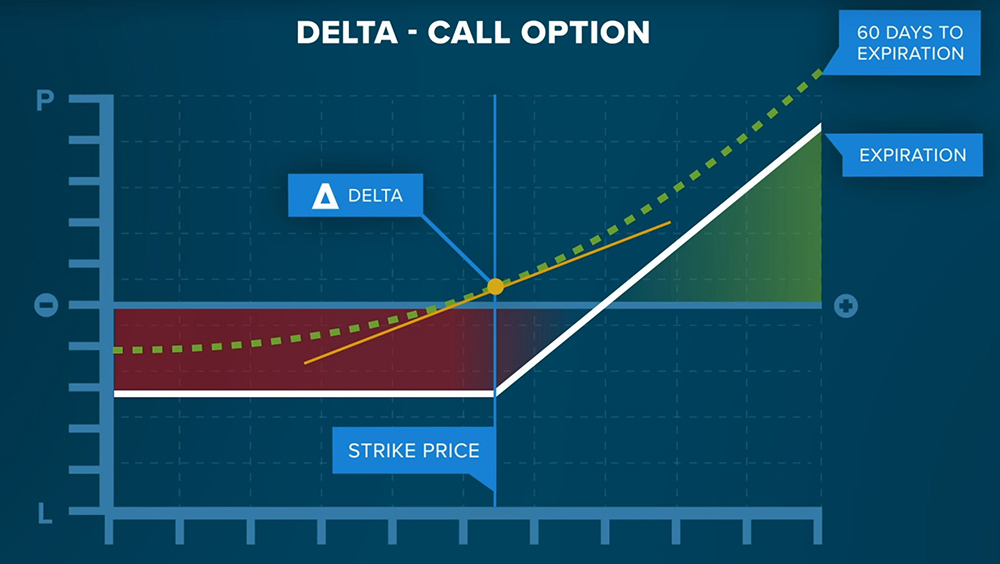
Delta is perhaps the most intuitive of the Greeks. It measures the sensitivity of an option’s price to changes in the price of the underlying asset. A Delta of 0.50, for instance, suggests that the option’s price will move roughly 50 cents for every $1 movement in the underlying.
In multi-leg trades, Delta management is critical for controlling directional exposure. For example, a bull call spread, which involves buying a lower strike call and selling a higher strike call, results in a net Delta that reflects a moderated bullish bias. Traders must monitor this net Delta closely, as it represents the approximate directional risk of the entire position.
Advanced traders often adjust Delta dynamically through hedging or by altering their positions. This process, known as Delta hedging, helps maintain a neutral or targeted exposure, enabling the strategy to respond more predictably to market movements. Understanding how each leg contributes to the overall Delta allows traders to balance risk and ensure their multi-leg strategy aligns with their market outlook.
Gamma: Managing Rate of Delta Change
Gamma measures the rate of change in Delta relative to movements in the underlying asset. While Delta indicates how sensitive an option is to price changes, Gamma shows how that sensitivity itself evolves. High Gamma positions can experience rapid swings in Delta as the underlying price moves, which is particularly important for multi-leg strategies with near-the-money options.
Effective Gamma management is essential for traders looking to maintain stable risk exposure. For instance, positions with high Gamma can require frequent adjustments, especially in volatile markets. Conversely, low Gamma positions provide more predictable Delta behaviour, which may be desirable for certain income-focused strategies.
In multi-leg trades, Gamma can be used strategically. Traders might construct positions to benefit from increasing Gamma when anticipating sharp price movements or reduce Gamma exposure to avoid sudden swings. By actively monitoring Gamma, traders gain insight into the sensitivity of their Delta, allowing for more precise control over the position’s directional and timing risks.
Vega: Navigating Volatility Sensitivity
Vega measures an option’s sensitivity to changes in implied volatility, a crucial factor in options pricing. Higher Vega indicates that the option’s value is more responsive to volatility fluctuations. Multi-leg trades can be significantly affected by changes in market volatility, making Vega management a key component of risk control.
For example, long straddles and strangles are highly Vega-sensitive because they profit from significant volatility increases regardless of direction. On the other hand, selling options in spreads or iron condors generally benefits from declining volatility, as the premiums collected erode more slowly than expected.
Traders can adjust Vega exposure by selecting appropriate strikes, expiration dates, and combinations of long and short options. By understanding the net Vega of a multi-leg trade, investors can better anticipate how changes in market conditions might affect profitability and adjust their positions accordingly.
Integrating Greeks for Strategic Advantage
The true art of multi-leg options trading lies in integrating Delta, Gamma, and Vega into a cohesive strategy. These Greeks are interconnected, and adjusting one often impacts the others. For instance, altering Delta through a hedge may also influence Gamma and Vega exposure, requiring a careful balancing act.
Professional traders often use Greek matrices and risk dashboards to visualise and manage their positions. By quantifying the combined effects of price movements, volatility changes, and time decay, they can make informed adjustments that enhance returns while mitigating risk. This proactive approach is particularly valuable in fast-moving markets, where small misalignments can have outsized effects on complex trades.
Practical Applications for Traders
For traders looking to deepen their understanding of multi-leg options, it is essential to start with a clear grasp of the mechanics behind each Greek. Scenario analysis and paper trading can be invaluable tools for exploring how different market conditions affect Delta, Gamma, and Vega. Over time, this experience builds intuition, enabling more confident decision-making.
Additionally, traders who want to expand their knowledge of options fundamentals and explore various strategies can benefit from resources that explain the mechanics in actionable terms. Learning what is a trade option provides the foundation needed to construct multi-leg trades and manage their Greeks effectively.
Conclusion
Options Delta, Gamma, and Vega are more than just theoretical constructs; they are practical instruments for navigating the complexities of multi-leg trades. By understanding and managing these Greeks, traders can maintain better control over directional risk, adjust to changing market conditions, and capitalise on volatility opportunities. Multi-leg trades offer flexibility and strategic depth, but their success hinges on disciplined Greek management and continuous monitoring.
Empowering yourself with a thorough comprehension of Delta, Gamma, and Vega transforms options trading from guesswork into a structured, strategic endeavour. Whether aiming to hedge risk, enhance income, or capitalise on volatility, mastering these core concepts equips traders to make informed decisions and optimise the performance of their multi-leg positions.

Comments are closed.